الوضع الليلي


 12:43:27
 2026-11-17
 23
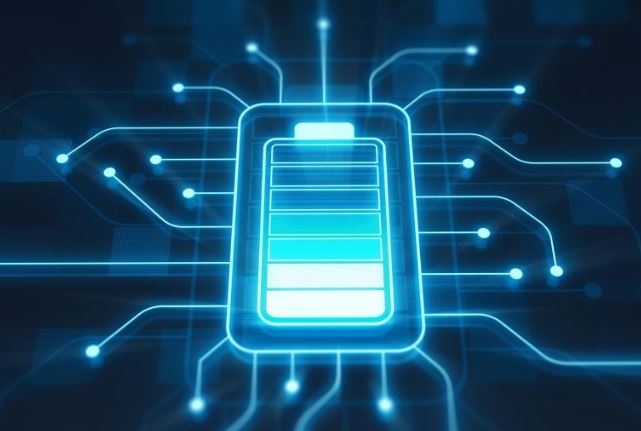
A simple chemical treatment could overcome a persistent weakness in next-generation solid-state batteries.
Scientists in China have developed a thin protective coating that could help overcome a major obstacle to longer-lasting, high-capacity batteries. In laboratory tests, solid-state batteries using the treated lithium metal retained 82.3% of their initial capacity after 300 charging cycles, compared with just 43.0% for batteries using untreated lithium.
Solving a Persistent Battery Problem
Lithium metal has been called the “holy grail” of energy storage because it can theoretically store nearly ten times as much charge per gram as the graphite used in conventional lithium-ion batteries. Its exceptional capacity could enable lighter batteries that store more energy and potentially support longer driving ranges.
To address this problem, researchers led by Professors Siwu Li, Weiwei Wu, and Chuang Yu combined a silicon-based polymer with indium chloride. When applied to lithium, the mixture forms lithium fluoride and lithium-indium alloy nanoparticles within a flexible protective film just 12 micrometers thick (about 0.00047 inches).
“This hybrid layer acts like a smart fortress,” explains corresponding author Siwu Li. “The polymer backbone provides flexibility to absorb the mechanical stress of lithium expanding and contracting. The lithium fluoride phase blocks electrons to prevent dendrite nucleation. And the lithium-indium alloy nanoparticles act as traffic conductors, guiding lithium ions to deposit evenly rather than piling up in dangerous spikes.”
Stronger Performance in Laboratory Tests
The coated lithium electrodes withstood a critical current density of 3.5 milliamperes per square centimeter, more than four times the 0.8 achieved by untreated lithium. In complete batteries containing a nickel-cobalt-manganese oxide cathode and a sulfide solid electrolyte, the protected electrodes delivered an initial capacity of 129.8 milliampere-hours per gram and retained 82.3% after 300 cycles at 0.5C.
Spectroscopy and electron microscopy confirmed the coating’s composition and revealed a dense, uniform layer without visible cracks or gaps.
A Simpler Path to Better Batteries
The coating could help address the chemical instability between lithium metal and sulfide solid electrolytes, a major challenge in solid-state battery development.
Because the protective layer forms from an applied liquid, it may be compatible with existing industrial coating equipment without requiring expensive vacuum processing. The researchers also plan to explore alternatives to indium, including tin and zinc.
Although commercial performance remains unproven, the findings offer a promising approach to making high-energy lithium metal batteries more stable and longer-lasting.
Reality Of Islam |
|
A simple ch

Researchers

A new break
Scientists
 9:3:43
2018-11-05
10 benefits of Marriage in Islam
7:5:22
2019-04-08
benefits of reciting surat yunus, hud &
9:45:7
2018-12-24
advantages & disadvantages of divorce
11:35:12
2018-06-10
6:0:51
2018-10-16
3:42:22
2021-12-24
11:2:27
2022-10-06
7:59:14
2018-06-21
6:14:17
2018-06-21
5:57:34
2023-03-18
2:13:43
2022-05-27
7:0:55
2022-05-17
5:41:46
2023-03-18
| LATEST |
 HOME