
الوضع الليلي


 8:11:29
  2025-12-02
  2168
2168
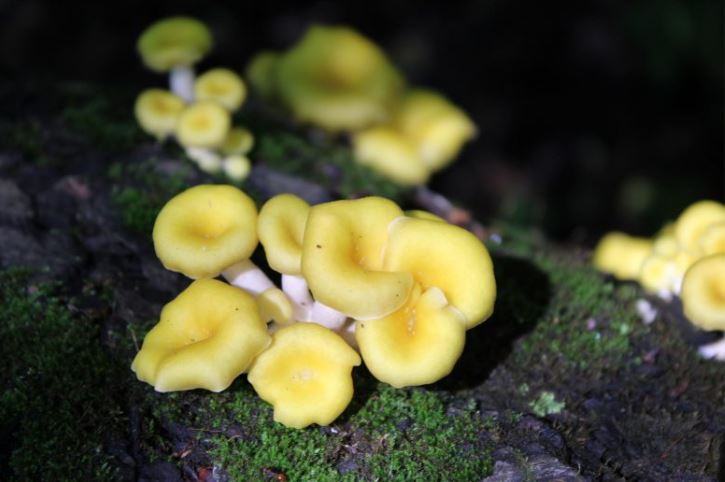
The golden oyster mushroom, known for its bright yellow caps, is widely sold in grow-your-own kits and in grocery stores, farmers’ markets, and gourmet shops. A University of Florida researcher now cautions that this popular mushroom is spreading beyond cultivation and beginning to appear in Florida’s forests.
Michelle Jusino, an assistant professor of forest pathology at the School of Forest, Fisheries, and Geomatic Sciences at the Institute of Food and Agricultural Sciences (UF/IFAS), warns that people who grow this mushroom need to be mindful of its ecological impact.
“The golden oyster mushroom may look harmless on a log, but it appears to be a strong competitor in the forest,” she said. “It is associated with changes in the fungal community, reducing biodiversity and potentially affecting processes like wood decomposition and carbon cycling.”
Her concern follows a field study in Wisconsin that she helped design while working with the U.S. Forest Service. The newly published study shows that human activities such as purchasing, cultivating, and moving mushrooms can unintentionally introduce invasive species that disrupt surrounding ecosystems.
Tracking the spread across North America
To trace how the mushroom has expanded its range, the researchers analyzed community science records from platforms such as iNaturalist and Mushroom Observer. Over the past decade, golden oyster mushrooms have been documented in more than 25 U.S. states, with sightings in Texas, District of Colombia, Virginia, North Carolina, Alabama, and Louisiana. A pioneering study by Andrea Bruce suggests that the species first escaped into the wild in the United States in the early 2010s.
“It is slowly marching south, which is really terrifying,” said Jusino. “In 2016, the mushroom was found growing in the wild in just five states, all in the Midwest and Northeast, but today I think fewer than 10 states east of the Mississippi river remain without records of golden oyster in the wild.”
Ecological consequences of the invasion
Jusino and a team of research scientists studied dead elm trees both with and without golden oyster mushrooms. They collected wood samples from different heights on each tree and used DNA-based methods to identify the fungi present. Their analysis showed that trees colonized by golden oyster mushrooms contained far fewer fungal species, and the species that did remain differed from those in trees without the invader. Several native fungi with ecological or medicinal significance appeared to be affected, and only a small number of species seemed able to coexist with the invasive mushroom.
“We want to remind growers that not all cultivated fungi stay where we put them. Once released outdoors, even accidentally, the golden oyster mushroom can spread quickly and outcompete native species,” said Jusino.
Researchers suggest monitoring, education, and using local mushroom species to help prevent future invasions. Meanwhile, Jusino is working on testing methods for continued research.
The overlooked threat of fungal invasions
As sightings of the golden oyster mushroom increase, Jusino and other researchers stress that even edible fungi can have far-reaching impacts on forests. Conserving native fungal biodiversity is essential for maintaining healthy ecosystems and the genetic diversity forests need to adapt to a changing climate.
Even though it’s a beautiful, edible species, it’s now proven capable of escaping cultivation and spreading into natural forests, where it can outcompete native fungi.
Jusino’s research also highlights a larger issue: microbial invasions often fly under the radar in conservation. While invasive plants, insect,s and animals are closely monitored, fungi and bacteria can quietly reshape ecosystems.
“Invasive fungi are part of the biodiversity crisis,” she said. “They’re small, but their impact can be enormous. Paying attention now gives us a chance to protect native ecosystems before the balance tips too far.”
Reality Of Islam |
|

After spend

A study of

Researchers
 9:3:43
2018-11-05
9:3:43
2018-11-05
10 benefits of Marriage in Islam
7:5:22
2019-04-08
benefits of reciting surat yunus, hud &
9:45:7
2018-12-24
advantages & disadvantages of divorce
11:35:12
2018-06-10
6:0:51
2018-10-16
7:26:19
2022-04-08
12:10:56
2022-11-17
12:47:1
2022-12-20
8:30:23
2022-03-03
3:42:22
2021-12-24
7:0:55
2022-05-17
a hero waters thirsty wild animals
9:4:9
2022-01-06
5:41:46
2023-03-18
| LATEST |
 HOME
HOME























