الوضع الليلي


 10:27:5
  2024-04-15
  1515
1515
Legend has it that 16th-century Hungarian countess Elizabeth Báthory had a gruesome method for retaining her youthful beauty.
Historical records say the noblewoman was accused of and imprisoned for murdering hundreds of girls to bathe in their supposedly restorative blood. The veracity of those accusations is questionable, at best, but the notion of resorting to arcane black magic in the quest for eternal youth persists.
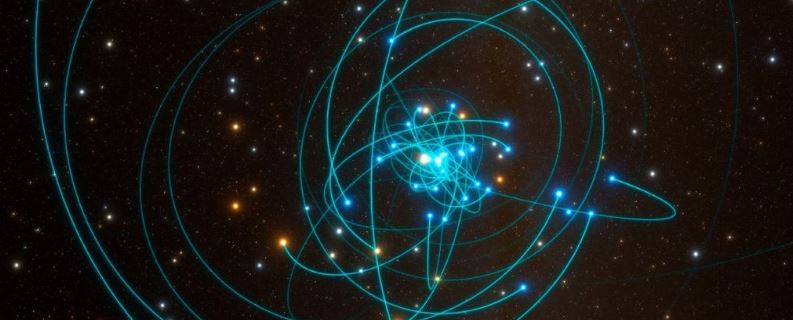
While slurping up the blood of our fellows may not work well on humans, new evidence indicates that it can be very powerfully rejuvenating indeed – for stars. A study of the stars crashing around in the Milky Way's galactic center suggests that they are much, much older than they appear – and that their youthful good looks are the result of cosmic cannibalism.
"A few stars win the collision lottery," says astrophysicist Sanaea Rose of Northwestern University in Illinois.
"Through collisions and mergers, these stars collect more hydrogen. Although they were formed from an older population, they masquerade as rejuvenated, young-looking stars. They are like zombie stars; they eat their neighbors."
The galactic center is a hectic place. To start with, there is a chonkin' great supermassive black hole there, some 4 million times the mass of the Sun. Around it, stars whirl and whiz, reaching absolutely insane speeds on their long, looping orbits. And there are a lot of them. The galactic center is positively jostling with stars, the Milky Way's densely crowded hub.
It's an environment that's primed for star-on-star crime.
"It's a bit like running through an incredibly crowded subway station in New York City during rush hour," Rose explains. "If you aren't colliding into other people, then you are passing very closely by them. For stars, these near collisions still cause them to interact gravitationally. We wanted to explore what these collisions and interactions mean for the stellar population and characterize their outcomes."
Studying the stars in the galactic center directly is pretty tricky, because there's a lot of stuff in there, including dense clouds that obscure the view in most wavelengths. Rose and her colleagues turned to simulations, creating a model of the galactic center and everything within it, and watching the outcomes once the stars are set in motion.
They found that the fate of colliding stars appears to be directly linked to proximity to the black hole. Within 0.01 parsecs – about one-thirtieth of a light-year – interactions between stars are par for the course, but because of their high speeds, they tend to survive. Interactions tend to be grazing collisions that leave both stars more or less intact, although they may lose a fair bit of their outer material in the process.
Outside of that 0.01-parsec boundary, though, things get a little more violent. Because the stars are moving much more slowly, they don't have the angular momentum to keep going when they encounter each other. Instead, they become snared in each other's gravity, resulting in a full collision that sees the stars moosh together to become one big star.
And it's in this process that some stars gain enough hydrogen to give them a more youthful appearance, even though they may be quite a bit older. But there's a trade-off. The more massive a star is, the shorter its lifespan.
"Massive stars are sort of like giant, gas-guzzling cars," Rose explains. "They start with a lot of hydrogen, but they burn through it very, very fast."
The comparison to vampires sort of falls down a bit there. But the findings do explain a curious feature of the star population in the galactic center: a puzzling absence of old red giant stars. Both mass loss from grazing collisions and mergers that create larger, short-lived stars would reduce the number of red giants you'd expect to see in a normal star population, the researchers found.
Further observational and theoretical research could help shed light on these processes, and reveal the complex dynamics at play in a cosmic environment like no other in the galaxy.
Reality Of Islam |
|

After spend
A study of

Researchers
 9:3:43
2018-11-05
9:3:43
2018-11-05
10 benefits of Marriage in Islam
7:5:22
2019-04-08
benefits of reciting surat yunus, hud &
9:45:7
2018-12-24
advantages & disadvantages of divorce
11:35:12
2018-06-10
6:0:51
2018-10-16
12:47:1
2022-12-20
a hero waters thirsty wild animals
9:4:9
2022-01-06
bahlool & the throne of haroun rashid
8:20:35
2018-06-21
7:45:39
2018-06-21
1:38:41
2021-12-08
10:43:56
2022-06-22
7:6:7
2022-03-21
5:41:46
2023-03-18
| LATEST |
 HOME
HOME