الوضع الليلي


 7:51:52
  2023-09-19
  1747
1747
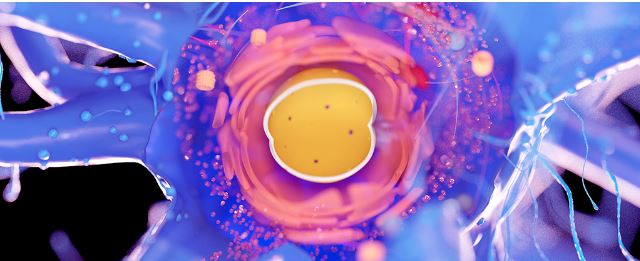
From the oxygen-carrying corpuscles in our blood to the branching neurons that govern our thoughts, our body is built of a dazzling variety of cells.
Researchers from institutions in Germany, Canada, Spain, and the US have published a comprehensive study of how many individual cells of each type there are in typical bodies.
Based on an exhaustive analysis of over 1,500 published sources, most adult males contain a total of around 36 trillion cells, while adult females tend to have some 28 trillion cells. A 10-year-old child, by comparison, would have in the region of 17 trillion.
As well as a total cell count, the study revealed something really interesting: if you group cells into categories based on their size, each size category contributes roughly the same amount to the mass of the body.
"These patterns are suggestive of a whole-organism trade-off between cell size and count and imply the existence of cell-size homeostasis across cell types," the researchers write in their published paper.
To put it another way, it appears there's a natural balancing act going on, where fewer larger cells and more smaller cells are produced to keep the categories even. What's more, the variation in size in each category was roughly similar as well.
Considering that the relative size of the body's smallest cells (like red blood cells, for example) and largest cells (such as muscle fibers) is like comparing the size of a shrew to a blue whale, that's a fascinating finding.
As the researchers point out, our cells are sized perfectly for their different roles – and any disruption to this scale often indicates the presence of disease. It's clearly important that this kind of cell regulation is happening, and it's done very smartly.
Scientists have attempted to estimate the number of cells in our bodies before, and the new figure is close to previous ones, but what makes this latest study special is the way it tries to dig into comparative cell sizes as well.
Future studies will have the opportunity to look into how exactly our bodies are regulating the size and number of cells that make us who we are – and how this regulation acts to keep our bodies healthy and growing normally.
The researchers are hopeful their findings will be useful in many different studies of biology – and with that aim in mind, all the data from the analysis is now available online.
"Our data serves to establish a holistic quantitative framework for the cells of the human body, and highlight large-scale patterns in cell biology," the teams write.
Reality Of Islam |
|

After spend
A study of

Researchers
 9:3:43
2018-11-05
9:3:43
2018-11-05
10 benefits of Marriage in Islam
7:5:22
2019-04-08
benefits of reciting surat yunus, hud &
9:45:7
2018-12-24
advantages & disadvantages of divorce
11:35:12
2018-06-10
6:0:51
2018-10-16
al-hussain (peace be upon him)
10:18:1
2022-09-21
the happy life of mankind requirement
6:36:36
2022-01-25
4:26:43
2022-02-21
7:0:55
2022-05-17
1:34:8
2022-02-01
6:14:17
2018-06-21
5:57:34
2023-03-18
5:41:46
2023-03-18
| LATEST |
 HOME
HOME