
الوضع الليلي


 2:31:12
  2023-08-23
  2234
2234
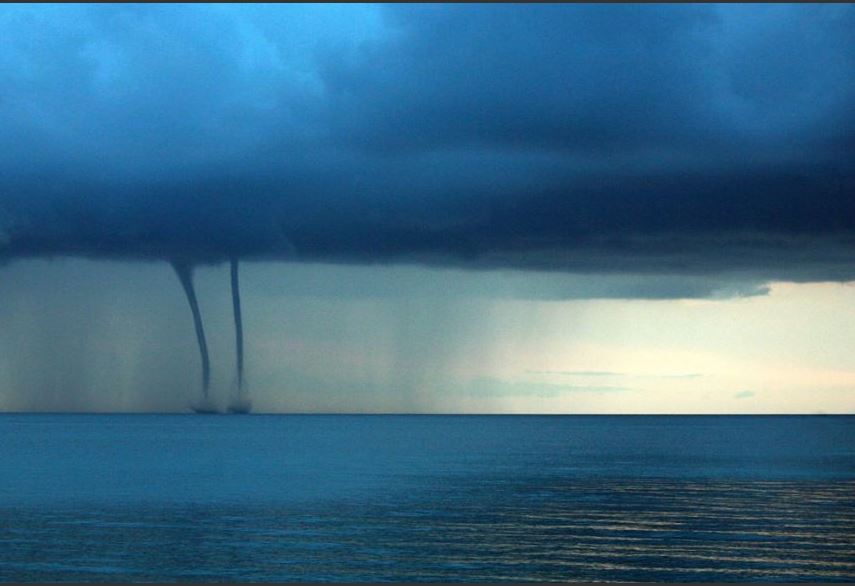
A waterspout is a column of cloud-filled wind rotating over a body of water.
Despite its name, a waterspout is not filled with water from the ocean or lake. A waterspout descends from a cumulus cloud.
It does not "spout" from the water. The water inside a waterspout is formed by condensation in the cloud. There are two major types of waterspouts: tornadic waterspouts and fair-weather waterspouts.
Tornadic waterspouts get their start as true tornadoes.
Influenced by winds associated with severe thunderstorms, air rises and rotates on a vertical axis. Tornadic waterspouts are the most powerful and destructive type of waterspout.
Fair-weather waterspouts, however, are much more common. Fair-weather waterspouts are rarely dangerous. The clouds from which they descend are not fast-moving, so fair-weather waterspouts are often static. Fair-weather waterspouts are associated with developing storm systems, but not storms themselves.
Both tornadic and fair-weather waterspouts require high levels of humidity and a relatively warm water temperature compared to the overlying air. Waterspouts are most common in tropical and subtropical waters, such as the Florida Keys, the islands of Greece, and off the east coast of Australia.
There are five stages of waterspout formation:
1. Dark spot. The surface of the water takes on a dark appearance where the vortex, or column of rotating wind, reaches it.
2. Spiral pattern. Light and dark bands spiral out from the dark spot.
3. Spray ring. A swirling ring of sea spray called a cascade forms around the dark spot. It appears to have an eye at the center, similar to that seen in a hurricane.
4. Mature vortex. The waterspout is now at its most intense stage, visible from the surface of the water to the clouds overhead. It appears to have a hollow funnel and may be surrounded by vapor.
5. Decay. When the flow of warm air into the vortex weakens, the waterspout collapses.
The average spout is around 50 meters (165 feet) in diameter, with wind speeds of 80 kilometers per hour (50 miles per hour), corresponding to the weakest types of tornadoes on land. The largest waterspouts can have diameters of 100 meters (330 feet) and last for up to one hour, though the average lifetime is just five to 10 minutes.
The National Weather Service recognizes the dangers posed by waterspouts as part of its "severe local storm" warning list. Waterspouts not only put swimmers and boaters at risk, they also pose a threat to aircraft. Helicopters flying near waterspouts can be damaged and thrown off-course by such intense winds.
Reality Of Islam |
|

After spend

A study of

Researchers
 9:3:43
2018-11-05
9:3:43
2018-11-05
10 benefits of Marriage in Islam
7:5:22
2019-04-08
benefits of reciting surat yunus, hud &
9:45:7
2018-12-24
advantages & disadvantages of divorce
11:35:12
2018-06-10
6:0:51
2018-10-16
2:33:4
2023-02-15
8:4:21
2022-01-08
8:30:23
2022-03-03
7:59:14
2018-06-21
2:11:12
2022-10-15
9:39:36
2022-12-28
8:3:0
2018-06-21
5:41:46
2023-03-18
| LATEST |
 HOME
HOME























