الوضع الليلي


 11:50:11
  2023-06-24
  1425
1425
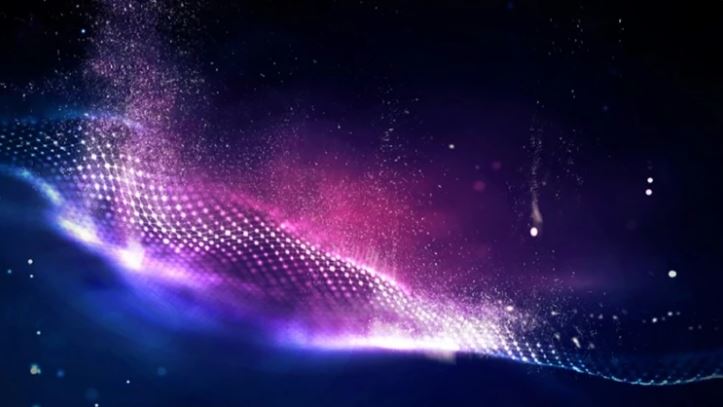
Scientists have solved a decades-old mystery about whether light can be effectively trapped in a 3D forest of microscopic particles.
Using a new method for squishing huge quantities into a model of particle interactions, a team of physicists in the US and France has revealed the conditions under which a wave of light can be stopped by defects in the right kind of material.
Known as Anderson localization, after the American theoretical physicist Philip W. Anderson, electrons can become trapped in disordered materials with randomly distributed distortions. His proposal in 1958 was an important moment in contemporary condensed matter physics, as it was applied across quantum mechanics as well as classical mechanics.
The wave-like quantum identity of the particle becomes increasingly chaotic, forcing the electron to stop and spin matter in an insulator.
Something similar seems to happen because electromagnetic waves modulate light through some materials, at least in one or two dimensions. Until now, no one has been able to tell if physics is in three dimensions (not through lack of trying).
Finally, advances in computational software and numerical simulations have solved the puzzle.
"We couldn't simulate large 3D systems because we didn't have enough computing power and memory," says applied physicist and electrical engineer Hui Kao, from Yale University in Connecticut. People were trying different numerical methods. But it was not possible to simulate such a large system. To show whether there is localization or not".
Using a new tool called FDTD Software Tidy3D, Cao and her colleagues were able to run calculations that would normally take days for days in just 30 minutes, speeding up the simulation process. The tool uses an improved version of the Finite Difference Time Domain (FDTD) algorithm, which divides areas into grids and solves equations at each grid point.
The software was also able to test different system configurations, sizes, and architecture parameters. The results of the numerical simulations obtained by the researchers showed that they were free of pieces that were problematic in previous studies.
What the researchers found is that light cannot be localized in 3D in dielectric materials such as glass or silicon, which may explain why scientists have been baffled for so long. However, there was clear numerical evidence of 3D Anderson localization in random packings of conductive metallic domains.
"When we saw Anderson localization in the numerical simulation, we were thrilled," Kao says. "It was incredible, considering that there had been such a long pursuit by the scientific community."
The results give scientists a better idea of where to direct their research in the future, and a greater understanding of how Anderson 3D localization may occur in different types of materials.
Reality Of Islam |
|

After spend
A study of
Researchers
 9:3:43
2018-11-05
9:3:43
2018-11-05
10 benefits of Marriage in Islam
7:5:22
2019-04-08
benefits of reciting surat yunus, hud &
9:45:7
2018-12-24
advantages & disadvantages of divorce
11:35:12
2018-06-10
6:0:51
2018-10-16
2:5:14
2023-01-28
7:0:55
2022-05-17
4:25:57
2023-02-11
9:30:2
2021-11-12
5:57:34
2023-03-18
11:34:48
2022-06-29
6:0:8
2023-03-19
5:41:46
2023-03-18
| LATEST |
 HOME
HOME