الوضع الليلي


 11:21:49
  2023-05-05
  1684
1684
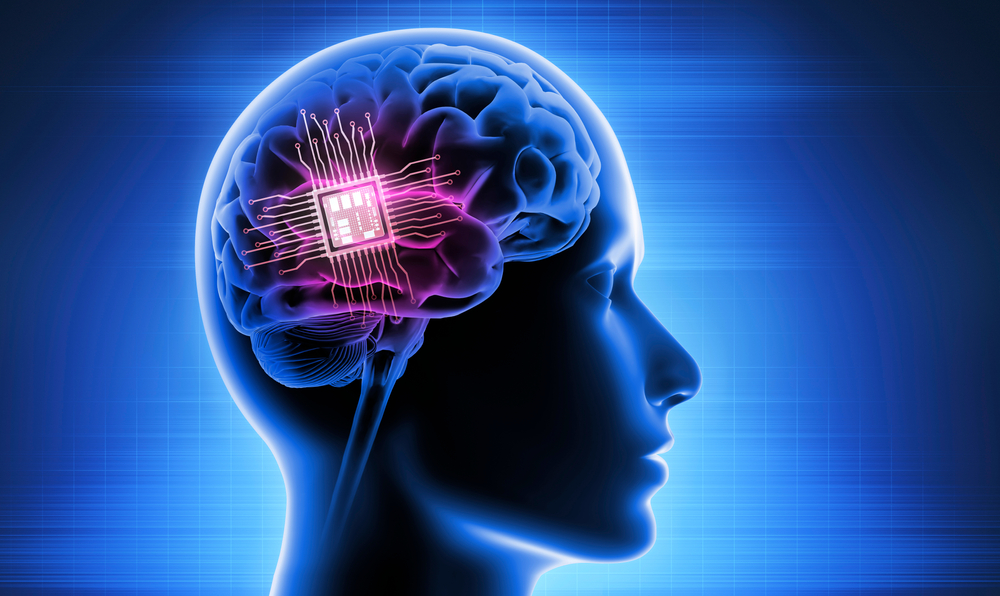
Will future computers run on human brain cells?
A "biocomputer" powered by human brain cells could be developed within our lifetime, according to Johns Hopkins University researchers who expect such technology to exponentially expand the capabilities of modern computing and create novel fields of study.
"Computing and artificial intelligence have been driving the technology revolution but they are reaching a ceiling," said Thomas Hartung, a professor of environmental health sciences at the Johns Hopkins Bloomberg School of Public Health and Whiting School of Engineering who is spearheading the work. "Biocomputing is an enormous effort of compacting computational power and increasing its efficiency to push past our current technological limits."
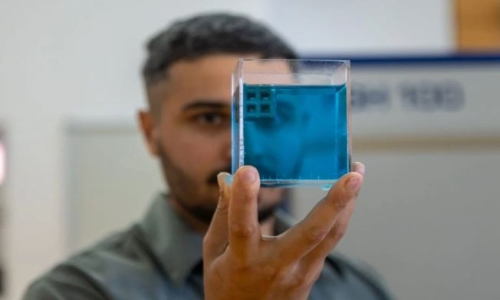
For nearly two decades' scientists have used tiny organoids, lab-grown tissue resembling fully grown organs, to experiment on kidneys, lungs, and other organs without resorting to human or animal testing. More recently Hartung and colleagues at Johns Hopkins have been working with brain organoids, orbs the size of a pen dot with neurons and other features that promise to sustain basic functions like learning and remembering.
"This opens up research on how the human brain works," Hartung said. "Because you can start manipulating the system, doing things you cannot ethically do with human brains."
Hartung began to grow and assemble brain cells into functional organoids in 2012 using cells from human skin samples reprogrammed into an embryonic stem cell-like state. Each organoid contains about 50,000 cells, about the size of a fruit fly's nervous system. He now envisions building a futuristic computer with such brain organoids.
Computers that run on this "biological hardware" could in the next decade begin to alleviate energy-consumption demands of supercomputing that are becoming increasingly unsustainable, Hartung said. Even though computers process calculations involving numbers and data faster than humans, brains are much smarter in making complex logical decisions, like telling a dog from a cat.
"The brain is still unmatched by modern computers," Hartung said. "Frontier, the latest supercomputer in Kentucky, is a $600 million, 6,800-square-feet installation. Only in June of last year, it exceeded for the first time the computational capacity of a single human brain -- but using a million times more energy."
It might take decades before organoid intelligence can power a system as smart as a mouse, Hartung said. But by scaling up production of brain organoids and training them with artificial intelligence, he foresees a future where biocomputers support superior computing speed, processing power, data efficiency, and storage capabilities.
"It will take decades before we achieve the goal of something comparable to any type of computer," Hartung said. "But if we don't start creating funding programs for this, it will be much more difficult."
Organoid intelligence could also revolutionize drug testing research for neurodevelopmental disorders and neurodegeneration, said Lena Smirnova, a Johns Hopkins assistant professor of environmental health and engineering who co-leads the investigations.
"We want to compare brain organoids from typically developed donors versus brain organoids from donors with autism," Smirnova said. "The tools we are developing towards biological computing are the same tools that will allow us to understand changes in neuronal networks specific for autism, without having to use animals or to access patients, so we can understand the underlying mechanisms of why patients have these cognition issues and impairments."
To assess the ethical implications of working with organoid intelligence, a diverse consortium of scientists, bioethicists, and members of the public have been embedded within the team.
Reality Of Islam |
|
After spend
A study of
Researchers
 9:3:43
2018-11-05
9:3:43
2018-11-05
10 benefits of Marriage in Islam
7:5:22
2019-04-08
benefits of reciting surat yunus, hud &
9:45:7
2018-12-24
advantages & disadvantages of divorce
11:35:12
2018-06-10
6:0:51
2018-10-16
3:18:29
2022-12-24
2:13:43
2022-05-27
a hero waters thirsty wild animals
9:4:9
2022-01-06
2:2:13
2022-10-08
7:45:39
2018-06-21
12:47:1
2022-12-20
8:15:37
2023-02-16
5:41:46
2023-03-18
| LATEST |
 HOME
HOME