Other derivational processes
So far we have looked at compounding, zero-derivation, and affixation. What are other examples of derivational processes?
Blending
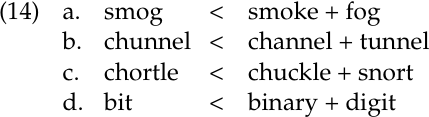
Blending is a common derivational process in English. Blends, also called portmanteau words, are formed by combining parts of more than one word.1 Speakers may be aware that a word has been formed via blending, as with spork (< spoon + fork), or the history of the word may be obscured, as with motel (< motor + hotel). Further examples of blends are given below:
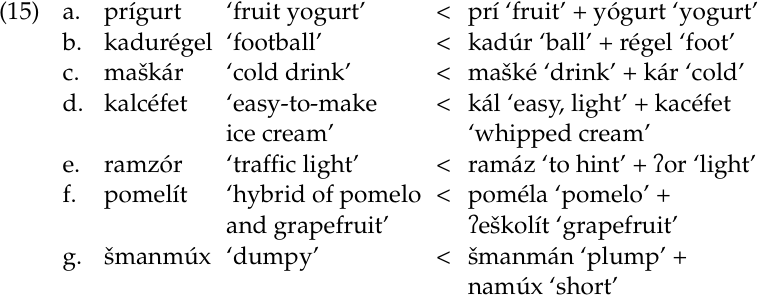
Neither blending nor any of the other derivational processes we have been talking about is limited to English, of course. While blends are rare or absent in many Indo-European languages, they are common in Hebrew, examples of which are given below (Bat-El 1996), and Japanese:
Blending is an example of creative language use. It generally does not adhere to strict constraints, as does affixation. For example, we note in (14d) that bit comes from ‘binary digit’. Nothing in the grammar would have prevented speakers from coining the word *binit from the same parts. The word-formation processes discussed below, including acronym formation, clipping, folk etymology, and backformation, are treated by linguists separately from productive derivational (lexeme formation) phenomena.
1 We say more about portmanteau words in Exponence.








