Human lexeme-inators?
Derivational morphology is part of a native speaker’s linguistic knowledge. An understanding of its functioning allows speakers to be extraordinarily creative in coining new terms. Evil Dr Heinz Doofenshmirtz, from Disney Channel’s Phineas and Ferb is not only a prolific inventor of (woefully ineffective) devices, he’s also a great coiner of new (and very short-lived) nouns using the suffix -inator (cf. terminator), e.g. audience controlinator, drillinator, media erasinator, giant baking-soda volcanoinator. Children’s ability to recognize ‘inator’ in this context as a nominalizing suffix with the meaning ‘device used to achieve a specified aim’ makes these unfamiliar words readily comprehensible even though they’re unlikely to make it into any dictionary, or indeed survive longer than a single episode.
By whatever criteria we apply, then, some meaningful linguistic items look more like ‘words’ than others: for this reason it is often more productive to look at meaning-bearing elements or morphemes. A word like internationalization, for example, seems naturally divisible into five elements:
inter+nation+al+iz+ation
The second, 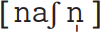 , derives from a free morpheme, namely the noun nation
 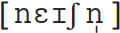 , which can occur independently (a powerful nation, etc.). The rest are bound morphemes, which can only occur as parts of bigger units and not on their own: inter- is a prefix conveying the notion of ‘between’ in a range of adjectives (interactive, interpersonal, interplanetary), verbs (interpose, interact) and nouns (interpol, interface); -al is a grammatical suffix frequently used to derive adjectives from nouns (structural, financial, orbital); -ize/ise is a verbal suffix used to derive verbs, while -ation is an abstract noun suffix (rationalization, penetration, realization). Morphemes, then, are minimal meaning-bearing units, uniting an arbitrary form and meaning or grammatical function. As we have seen, a distinction is usually made between inflectional morphemes and derivational morphemes.








