الوضع الليلي


 12:32:51
  2025-10-06
  1748
1748
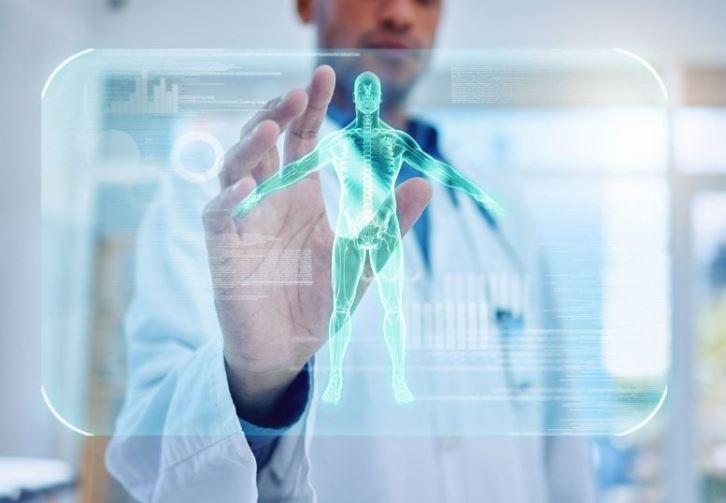
Researchers suggest that examining the inner workings of cells more closely could help physicians detect diseases earlier and more accurately match patients with effective therapies.
Researchers at McGill University have created an artificial intelligence tool capable of uncovering disease markers that were previously hidden within individual cells.
The study, published in Nature Communications, describes how this new system, called DOLPHIN, could eventually help physicians detect diseases at earlier stages and make more informed decisions about treatment strategies.
“This tool has the potential to help doctors match patients with the therapies most likely to work for them, reducing trial-and-error in treatment,” said senior author Jun Ding, assistant professor in McGill’s Department of Medicine and a junior scientist at the Research Institute of the McGill University Health Centre.
Zooming in on genetic building blocks
According to the team, disease markers often appear as subtle shifts in RNA expression, offering clues about whether an illness is present, how serious it might become, or how it could react to specific therapies.
Traditional gene-level analysis methods tend to combine these signals into a single count for each gene, which can hide important variations and provide only a limited view of what is happening inside the cell.
Now, advances in artificial intelligence have made it possible to capture the fine-grained complexity of single-cell data. DOLPHIN moves beyond gene-level, zooming in to see how genes are spliced together from smaller pieces called exons to provide a clearer view of cell states.
“Genes are not just one block, they’re like Lego sets made of many smaller pieces,” said first author Kailu Song, a PhD student in McGill’s Quantitative Life Sciences program. “By looking at how those pieces are connected, our tool reveals important disease markers that have long been overlooked.”
In one test case, DOLPHIN analyzed single-cell data from pancreatic cancer patients and found more than 800 disease markers missed by conventional tools. It was able to distinguish patients with high-risk, aggressive cancers from those with less severe cases, information that would help doctors choose the right treatment path.
A step toward ‘virtual cells’
More broadly, the breakthrough lays the foundation for achieving the long-term goal of building digital models of human cells. DOLPHIN generates richer single-cell profiles than conventional methods, enabling virtual simulations of how cells behave and respond to drugs before moving to lab or clinical trials, saving time and money.
The researchers’ next step will be to expand the tool’s reach from a few datasets to millions of cells, paving the way for more accurate virtual cell models in the future.
Reality Of Islam |
|
A study of

Researchers
MIT enginee
 9:3:43
2018-11-05
9:3:43
2018-11-05
10 benefits of Marriage in Islam
7:5:22
2019-04-08
benefits of reciting surat yunus, hud &
9:45:7
2018-12-24
advantages & disadvantages of divorce
11:35:12
2018-06-10
6:0:51
2018-10-16
3:18:29
2022-12-24
11:11:59
2023-02-01
8:4:21
2022-01-08
10:55:53
2022-06-13
10:35:40
2022-05-26
1:38:41
2021-12-08
11:2:27
2022-10-06
5:41:46
2023-03-18
| LATEST |
 HOME
HOME