الوضع الليلي


 11:48:45
  2023-06-15
  2736
2736
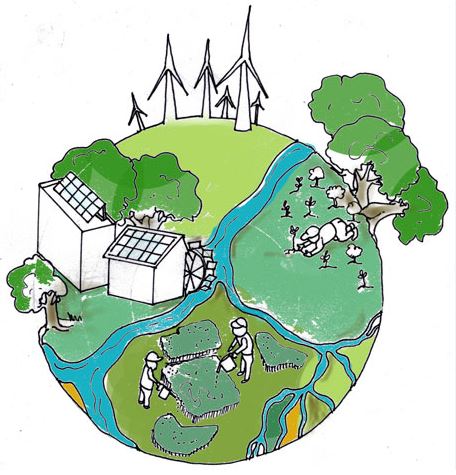
The types of societies differ according to the political, economic and cultural divisions. From the political point of view, societies are divided according to the type of government prevailing in them into monarchical societies, princely societies, republican societies, tyrannical societies, democratic societies, and popular societies. As for the economic aspect, societies are divided according to the economic system they practice into capitalist societies in which the economic system is based on the freedom of individuals to own property as they wish. They are of two types: free capitalist societies and restricted capitalist societies. The second type of societies from an economic point of view is socialist societies, in which the economic system is based on serving the group and serving the state.
In terms of civilization, many sociologists agree to divide societies into the following:
1- Picking society: It is the simplest type of society, and its people live on picking fruits from forest trees and valleys.
2- The fishing community: It is a simple society, but it is more developed than the previous one, and it has some order and has a chief.
3- The rural agricultural community: it is larger than the fishing community and more developed. Its members work in agriculture or grazing. They do not have large institutions. They may have a school. People usually gather in the rural community around the temple or religious institution. In large villages, village councils organize the lives of individuals in the village, and provide them with the various services they need, such as water, electricity, mail, health centers, etc. There may be representatives of government institutions in the village especially the security establishment to maintain laws and order.
4- Civilized rural society: It is larger than the former rural agricultural society and relies mainly on agriculture, but it has some light industries related to agricultural production or agricultural tools. In this society there are various institutions and associations, and some government departments to organize the various life affairs of citizens.
5- The urban society: it is more sophisticated and developed, and this society relies mostly on trade and industry, the exchange of needs and the distribution of products. It is a link between the agricultural villages and the large industrial city. In this society there are various industries, agricultural and non-agricultural.
6- The metropolitan community, which is larger than the urban community, and combines many contradictions, because its population is a mixture of several relatively smaller communities, and it is a multi-class society, races, religions, and nationalities. A specific neighborhood or a specific area within a large community, for example, the major cities in the Arab countries.
7- The super metropolitan community or (Megalopolis), which is the very large city community, the state city that includes a number of neighboring cities and villages, and in these cities there is a large mixture of different communities, and some of them may live completely independent from each other. The other is in its services, systems, or institutions, and these cities include Cairo, New York, Tokyo, and London.
8- A closed society: a closed society means a society that consists of a single unit that has its own principles, systems, beliefs, laws, traditions, and way of life. For example (sectarian societies, class societies, and professional societies). These communities are usually called minority communities, so they are usually within a larger community in the great city or the big city, and they may be isolated from the rest of the communities.
9- Immediate or temporary societies: This type of society gathers its members for a specific period of time, and after that it may turn into any of the previous types of societies, or it will disappear with the disappearance of the purpose for which it was established. And sometimes it is a strip society, which is the population gatherings on both sides of the road that connect two large or small cities, and they do not belong to either of them, and they may join them after one of the two cities.
Reality Of Islam |
|

A study of

Researchers

MIT enginee
 9:3:43
2018-11-05
9:3:43
2018-11-05
10 benefits of Marriage in Islam
7:5:22
2019-04-08
benefits of reciting surat yunus, hud &
9:45:7
2018-12-24
advantages & disadvantages of divorce
11:35:12
2018-06-10
6:0:51
2018-10-16
10:55:53
2022-06-13
12:47:1
2022-12-20
11:11:59
2023-02-01
2:2:13
2022-10-08
8:30:23
2022-03-03
3:43:50
2022-11-05
7:59:14
2018-06-21
5:41:46
2023-03-18
| LATEST |
 HOME
HOME