
Arc Lighting
 المؤلف:
GEORGE A. HOADLEY
المؤلف:
GEORGE A. HOADLEY
 المصدر:
ESSENTIALS OF PHYSICS
المصدر:
ESSENTIALS OF PHYSICS
 الجزء والصفحة:
p-420
الجزء والصفحة:
p-420
 2025-12-17
 465
465
The simplest arc light is produced by sending a current of electricity from one carbon rod to another across a short air gap. To maintain the ordinary arc a difference of potential of from 45 to 50 volts is required, and this sends through the arc a current of from 9 to 10 amperes.
The + carbon is very much hotter than the - carbon, and as the current passes, the carbon becomes incandescent and some of it crosses the space between, forming a conductor for the current. This gives to the + carbon a cuplike shape in the middle, and this cup is the seat of the most intense artificial light and heat that have been produced.
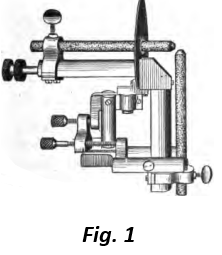
A type of lamp much used in projection lanterns is the 90° angle lamp, one form of which is shown in Fig. 1. When used with the direct current the horizontal carbon is made the positive pole and its crater is kept in the axis of the lantern. The positive carbon wears away twice as fast as the negative, but both carbons can be kept in place as they wear away by being pushed forward by separate feeding screws. This form of lamp can also be used with the alternating current, in which case they are fed at an equal rate.
 0
0
 0
0
لا توجد تعليقات بعد
ما رأيك بالمقال : كن أول من يعلق على هذا المحتوى
 الاكثر قراءة في الكهربائية
 اخر الاخبار
اخبار العتبة العباسية المقدسة








