What are Proper Adjectives?
Most adjectives are "common adjectives". They describe people, places and things, for example:
tall man, big dog, noisy baby,large garden, empty room, beautiful city, red car, hot weather, expensive watch
"Proper adjectives" also describe people, places and things, but they are based on names and therefore need to be capitalized, like the names. For example, Spain is the name of a country and starts with a capital letter. The adjective based on Spain (Spanish) must also start with a capital letter. Mars is the name of a planet and starts with a capital letter. The adjective based on Mars (Martian) must also start with a capital letter. Shakespeare was the name of a famous writer and starts with a capital letter. The adjective based on Shakespeare (Shakespearean) must also start with a capital letter.
Since you live in Spain, do you enjoy Spanish food?
If people ever live on the planet Mars, they will have to endure the extremes of the Martian climate.
Although William Shakespeare is best known for his plays, many exams also cover Shakespearean poetry.
Proper adjectives are mostly of two types:
those that come from names of places—countries, continents, regions, cities
those that come from names of people—usually famous people, mostly historical, some modern
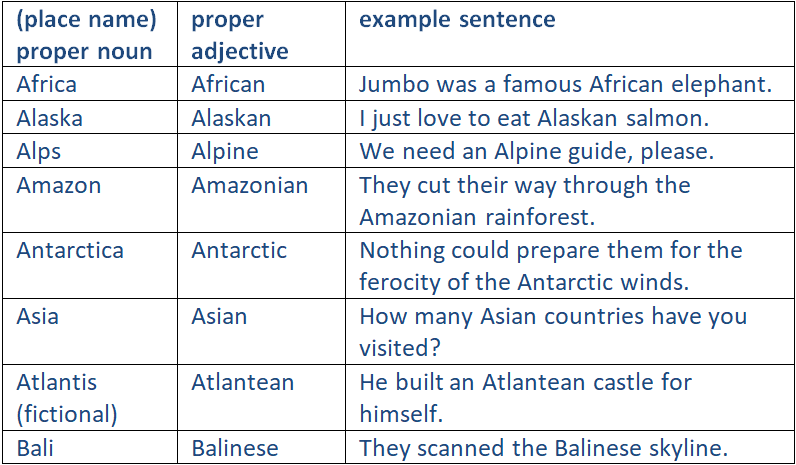
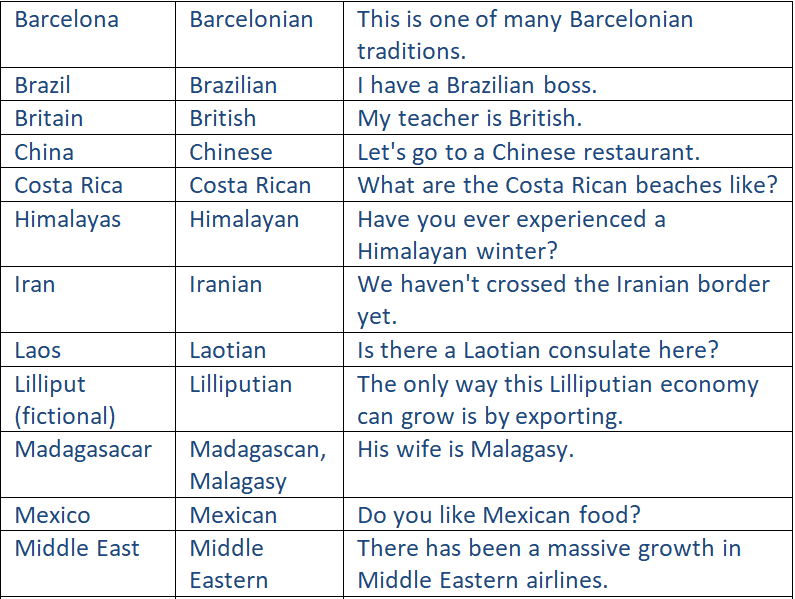
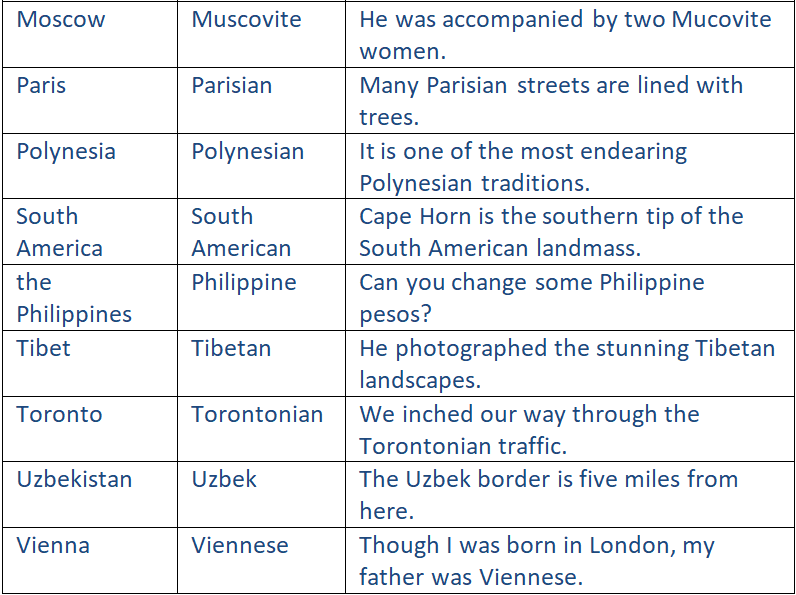
Proper Adjectives from Place Names (countries, continents, regions, cities)
Your country is a proper noun and it has a capitalized proper adjective. Here are a few examples of proper adjectives based on place names, and you can find a much longer list of proper adjectives based on place names here:
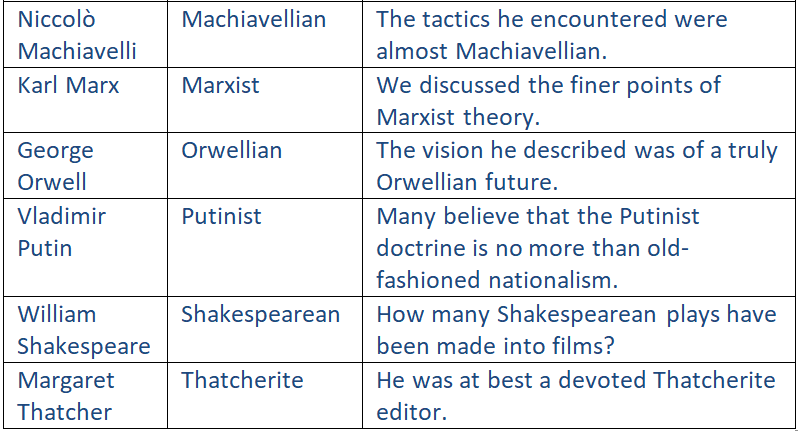
Proper Adjectives from People's Names (eponymous )
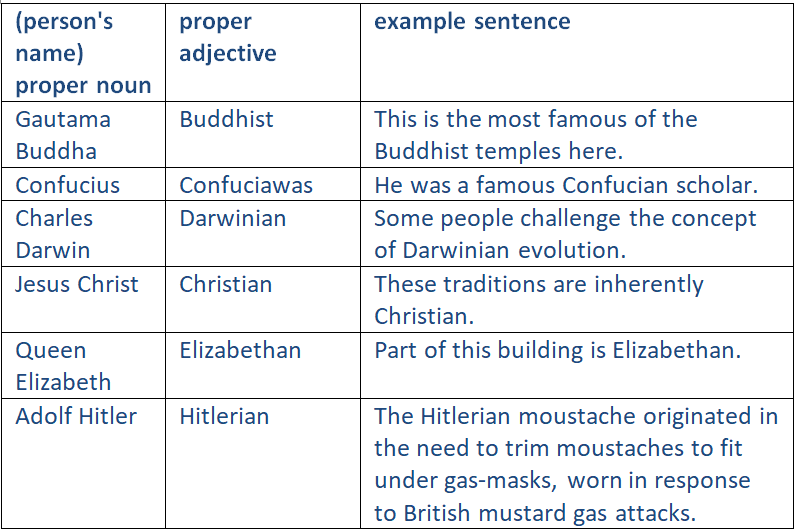
Your name is a proper noun and if you were super-famous it might have a capitalized proper adjective. Nouns and adjectives derived from people's names—both real and fictional—are called "eponymous". Eponymous adjectives are by definition proper adjectives. Here are a few examples, and you can find a much longer list of eponymous adjectives here:
Prefixes with Proper Adjectives
Normally, a prefix attached to a proper adjective should not be capitalized. Look at these examples:
pre-Christian
Paganism was one of many pre-Christian religions.
pan-European
The search for a pan-European identity started well before 1900.
post-Thatcherite
Did wages go up in post-Thatcherite Britain?
Note that the prefix should not be capitalized, unless it starts the sentence:
anti-Western
Anti-Western sentiment was an inevitable consequence.
If the prefix itself is formed from a proper noun, then the prefix should of course by capitalized. In the following example, Austro- comes from the proper noun Austria and Hungarian comes from the proper noun Hungary.
Austro-Hungarian
The assassination of the heir to the Austro-Hungarian throne led directly to the First World War.
In the next example, the prefix Afro- comes from the proper noun Africa, and Caribbean is the proper adjective from the proper noun Caribbean:
Afro-Caribbean
He loves Afro-Caribbean music.
Hyphenation with Proper Adjectives
The same logic applies with suffixes and other hyphenated forms—capitalize only the word or words derived from a proper noun:
English-speaking
She asked for an English-speaking guide to show her around.
When Proper Adjectives Lose their Connection
Sometimes proper adjectives lose their connection with the proper noun that gave them the right to be capitalized, for example:
gargantuan, titanic, caesarian, draconian, herculean, spartan








