الوضع الليلي


 12:57:59
 2026-07-29
 1441
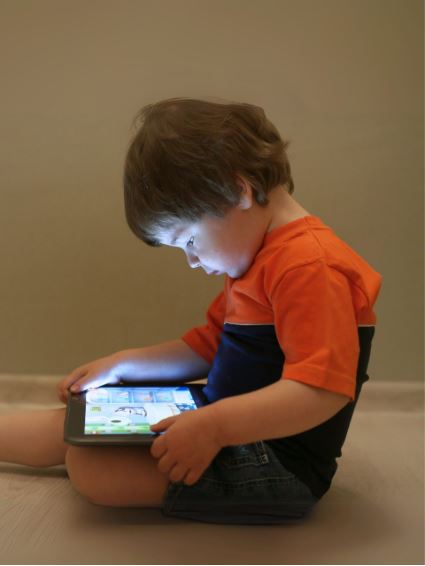
Screen use at certain stages of childhood was linked to subtle differences in later academic and cognitive performance.
Screens are now a routine part of life for many young children, but their possible effects on later learning remain uncertain. A study that tracked children from age 1 through age 8 found that greater viewing time, especially during infancy and near the start of school, was associated with lower academic performance at age 9 and weaker working memory at age 10.5. The results indicate that when children use screens may matter as much as how long they spend using them.
The World Health Organization (WHO) and the American Academy of Pediatrics advise avoiding screens before 18 to 24 months and limiting viewing to less than one hour per day between ages 2 and 5. Many children exceed those recommendations, yet previous research on screens and cognitive development has produced inconsistent results.
Much of that work has examined children at only one point in time, concentrated on those already in school, or lacked repeated measurements across the early years. Following children through several developmental stages can help researchers identify periods of greater sensitivity while accounting more carefully for family and environmental factors.
Repeated tracking tests when exposure matters
Researchers from Inserm and the National University of Singapore conducted the investigation, which was recently published in the World Journal of Pediatrics. Using information from the Growing Up in Singapore Towards healthy Outcomes (GUSTO) birth cohort, they evaluated parent-reported screen viewing at six different ages, then measured academic achievement and working memory years later.
Infancy and school entry stand out
The analysis included 502 children followed from infancy into middle childhood. Higher screen viewing during particular stages was associated with poorer academic results and weaker working memory later on. The clearest and most consistent relationships appeared during infancy and near school entry, suggesting that these may be especially sensitive periods for cognitive development.
Children with greater total screen exposure across childhood also generally performed less well in school. Together, the findings suggest that both the timing and overall amount of viewing may have implications for learning and memory.
“The effect sizes we saw at age 1 were the largest among all time points we examined,” the authors said. “That suggests early infancy may be a window of heightened sensitivity, when the developing brain is particularly vulnerable to the displacement of learning interactions by screen time. We were also surprised to see that while screen use at age 2 and 3 did not show significant links, the associations re-emerged at age 6—when children enter formal schooling. So it is not just about early years; screen use later in childhood still matters.”
Small effects could matter widely
The authors said the results support the view that “less is better” for children’s screen viewing. An additional hour per day may not produce an obvious effect in every child, but even small differences across a population could shift a meaningful number of children toward poorer academic outcomes.
Efforts to reduce screen use may therefore be most useful when they begin in infancy and are reinforced as children approach school age. The authors also noted that future studies should look beyond duration to examine the quality of content, the type of device used, and whether parents watch alongside their children, since each of these factors could shape developmental outcomes.
Reality Of Islam |
|

Metal foam

By filling

Scientists
 9:3:43
2018-11-05
10 benefits of Marriage in Islam
7:5:22
2019-04-08
benefits of reciting surat yunus, hud &
9:45:7
2018-12-24
advantages & disadvantages of divorce
11:35:12
2018-06-10
6:0:51
2018-10-16
10:35:40
2022-05-26
7:45:39
2018-06-21
9:39:36
2022-12-28
8:21:9
2018-06-21
10:47:11
2022-11-22
11:2:27
2022-10-06
7:32:24
2022-02-14
5:41:46
2023-03-18
| LATEST |
 HOME