الوضع الليلي


 6:38:34
  2026-01-13
  1732
1732

Batteries power much of modern life, from smartphones to electric vehicles, but they still come with major challenges. High production costs and the risk of fires or explosions remain serious concerns. All-solid-state batteries have been promoted as a safer alternative, yet engineers have struggled to deliver safety, strong performance, and low cost at the same time. Now, a research team in South Korea has shown that battery performance can be significantly improved through structural design alone – without relying on costly metals.
Korean Research Team Reveals Structural Design Breakthrough
KAIST announced on January 7th that a research group led by Professor Dong-Hwa Seo of the Department of Materials Science and Engineering had developed a new design strategy for all-solid-state battery materials. The project involved collaboration with teams led by Professor Sung-Kyun Jung (Seoul National University), Professor Youn-Suk Jung (Yonsei University), and Professor Kyung-Wan Nam (Dongguk University). Their approach uses low-cost raw materials while delivering high performance and reducing the risk of fire or explosion.
Why Solid-State Batteries Are Safer but Harder to Improve
Most conventional batteries rely on a liquid electrolyte that allows lithium ions to move between electrodes. All-solid-state batteries replace this liquid with a solid electrolyte, which greatly improves safety. However, lithium ions do not move as easily through solids. In many previous designs, achieving fast ion movement required expensive metals or complex manufacturing steps.
Using Divalent Anions to Reshape Ion Pathways
To address this issue, the researchers focused on improving how lithium ions travel inside the solid electrolyte. Their solution centered on “divalent anions” such as oxygen and sulfur . These elements can alter the crystal structure of the electrolyte by becoming part of its basic framework, which directly affects how ions move through the material.
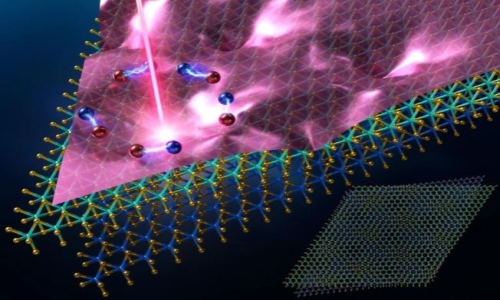
The team applied this concept to zirconium (Zr)-based halide solid electrolytes made from inexpensive materials. By carefully introducing divalent anions, they gained precise control over the internal structure. This design principle, called the “Framework Regulation Mechanism,” expands the pathways that lithium ions travel through and reduces the energy needed for their movement. Adjusting the bonding environment and crystal structure around the lithium ions allowed them to move faster and more easily.
Advanced Analysis Confirms Structural Changes
To confirm that these internal changes were taking place, the researchers used several high-precision analytical tools, including:
These techniques helped the team verify how the crystal structure changed and how those changes affected lithium-ion transport.
Strong Performance Gains With Low-Cost Materials
Testing showed that electrolytes containing oxygen or sulfur increased lithium-ion mobility by two to four times compared with traditional zirconium-based electrolytes. This result demonstrates that performance levels suitable for real-world all-solid-state battery applications can be achieved using affordable materials.
At room temperature, the oxygen-doped electrolyte reached an ionic conductivity of about 1.78 mS/cm, while the sulfur-doped version measured approximately 1.01 mS/cm. Ionic conductivity reflects how smoothly lithium ions move through a material, and values above 1 mS/cm are generally considered sufficient for practical battery use at room temperature.
Shifting Battery Innovation Toward Smarter Design
Professor Dong-Hwa Seo highlighted the broader impact of the findings, stating, “Through this research, we have presented a design principle that can simultaneously improve the cost and performance of all-solid-state batteries using cheap raw materials. Its potential for industrial application is very high.” Lead author Jae-Seung Kim added that the work represents a shift in focus from “what materials to use” to “how to design them” when developing next-generation battery materials.
Reality Of Islam |
|
A study of

Researchers

MIT enginee
 9:3:43
2018-11-05
9:3:43
2018-11-05
10 benefits of Marriage in Islam
7:5:22
2019-04-08
benefits of reciting surat yunus, hud &
9:45:7
2018-12-24
advantages & disadvantages of divorce
11:35:12
2018-06-10
6:0:51
2018-10-16
8:15:37
2023-02-16
8:3:0
2018-06-21
4:25:57
2023-02-11
5:58:12
2021-12-18
7:6:7
2022-03-21
7:32:24
2022-02-14
4:2:19
2022-10-10
5:41:46
2023-03-18
| LATEST |
 HOME
HOME