
الوضع الليلي


 7:21:1
  2023-04-27
  2474
2474
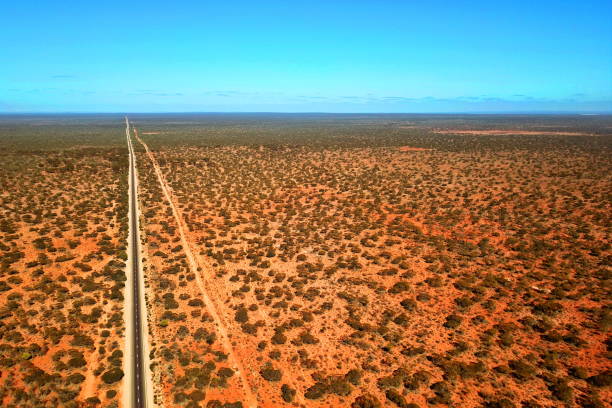
Researchers have discovered how long ago the Australian Nullarbor plain dried out, with a new approach shedding light on how ancient climate change altered some of the driest regions of our planet.
Iron-rich layers formed in ancient sediments were used to narrow down when an area dried out in response to changes in climate, such as the dramatic decline of groundwater in southern Australia.
These 'relics of drying' suggest the Nullarbor drastically shifted to dry conditions between 2.4 and 2.7 million years ago, uncovering how these environmental changes were key in shaping Australia's diverse flora and fauna.
Lead author Dr Maximilian Dröllner, from the Timescales of Mineral Systems Group in Curtin's School of Earth and Planetary Sciences, said defining the timing of climate change in ancient landscapes had proved challenging for geoscientists around the world.
"Almost half of the Earth's land surfaces are considered drylands, and they host about three billion people," Dr Dröllner said.
"Changes to these arid areas can impact both our society and regional biodiversity in profound ways and aridification has been instrumental in shaping the landscapes and ecosystems we see today."
Determining when climate events occurred in arid areas has been a difficult task for geoscientists, with researchers relying on indirect observations, such as marine sediments in neighbouring areas.
Co-author Associate Professor Milo Barham, also from Curtin's Timescales of Mineral Systems Group, said directly measuring products of the drying of landscapes can provide a much clearer timeframe.
"The amount of helium trapped in these iron-rich horizons can be used to determine when they were formed," Associate Professor Barham said.
"Exposing these 'relics' of drying to a tiny laser releases helium, which we can measure to constrain the timing of these dramatic environmental responses to Earth's climate history."
Determining when these events occurred can help explain how they impacted the biodiversity of the area and, particularly in the case of southern Australia, provides a timeframe for the evolution of several native species.
"The drying of Australia's interior separated the common ancestors of many species that once roamed freely across Australia," Dr Dröllner said.
"This separation led to the independent evolution of these isolated populations on the east and west coasts, eventually resulting in distinct species or sister species."
"Today we observe many examples of sister species of birds, insects, and plants that have common ancestors but now live thousands of kilometres apart, separated by environmental barriers created through ancient climate change."
Reality Of Islam |
|

After spend

A study of

Researchers
 9:3:43
2018-11-05
9:3:43
2018-11-05
10 benefits of Marriage in Islam
7:5:22
2019-04-08
benefits of reciting surat yunus, hud &
9:45:7
2018-12-24
advantages & disadvantages of divorce
11:35:12
2018-06-10
6:0:51
2018-10-16
7:0:55
2022-05-17
8:3:0
2018-06-21
3:43:50
2022-11-05
2:2:13
2022-10-08
8:30:23
2022-03-03
8:4:21
2022-01-08
7:26:19
2022-04-08
5:41:46
2023-03-18
| LATEST |
 HOME
HOME























